"Any prayers you happen to have lying around I would dearly appreciate."

Posted by Bel. The time is 5:11pm here in Wellington, NZ.

I'm a fan of Elizabeth Taylor. Not so much of the big-haired perfume-flogging 1980s Elizabeth Taylor, but more of the big-haired eyelash-batting 1960s Elizabeth Taylor.

When Michael Jackson died earlier this year, my panicked thoughts turned to her. Her health was bad enough as it was! Would the shock of her weird friend passing on finally do her in?

Love you too, Liz!

These tweets are from Taylor's verified Twitter account. (Of course she tweets! Don't question the woman. She'll tweet when she wants and marry when she wants.)

Not to be a fearmonger, but I don't think this bodes well. I think it would be best if we all put on another layer of eyeliner, some sparkly jewellery and though happy thoughts. (If you are possessed by the urge to marry someone, then just go with the flow. WWETD?)

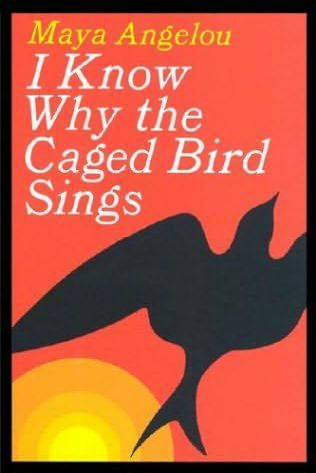
Book review: I Know Why The Caged Bird Sings

Posted by Bel. The time is 4:05pm here in Wellington, NZ.

Maya Angelou's I Know Why The Caged Bird Sings is an autobiographical story of growing up as a young black girl in a world defined by its boundaries, yet still determined to grow and flourish despite all set-backs.

Early in the book, there is a wonderful example of the lack of perspective that segregation brings. Young Maya sees the laundry baskets carried by the women who do housework for white households in the area. She is amazed to spy among the heaps of clean clothing the same style of underwear that she and her family wear! To her, whites are akin to an alien species. To imagine that they would be wearing underwear and doing normal everyday things is simply impossible.

As well as these basic insights, there are some moments in the book that are truly shocking. Because Maya's grandmother runs the general store, she has been able to help out local people during the worst times of the Depression. This includes a white dentist who lives on the other (wealthy) side of town. She calls on him to repay the favour when Maya is crippled by toothache. They approach the house via the servants' entrance after walking across the distance of the town, the little girl howling all the way with pain.

The reception they receive is chilling. The dentist flatly refuses to help them, culminating with the brutal statement that he would no more put his hand inside a negro's mouth than he would a dog's.

There are many difficult and even traumatic moments related in the book - the sexual abuse and rape that takes place when Maya is eight years old is the hardest to read, regardless of the outcome, in which he is taken to court and then murdered by her uncles. But overall the tone is positive and uplifting. This is not someone who is overwhelmed and downtrodden by the circumstances, and there is some comfort in thinking that the young girl of this "story" will experience the civil rights revolution of the 1960s and all that will entail.

One of my favourite moments of Obama's election was this interview with Maya Angelou, where (if you watch through to the end) she recites my favourite poem of hers. Watching it the morning after America elected a black man to its highest office, tears were brought to my eyes.

Maya Angelou on Barack Obama's presidential win and reciting "Still I Rise"

(Can't embed the video, sorry - you will have to click over to Jezebel to enjoy it!)

PS It should be noted that Angelou read a poem at Bill Clinton's inauguration - he who was famously called "the first black US president" by none other than Toni Morrison, author of The Color Purple and also Beloved, which is on 'The List' and I thought I reviewed ages ago but now I can't find a post for. Whoops.

--
I Know Why The Caged Bird Sings by Maya Angelou. Highly recommended.
First published in 1969. Set in Arkansas, Missouri & California, 1930s/40s.
#40 on The List. 24 left to go!

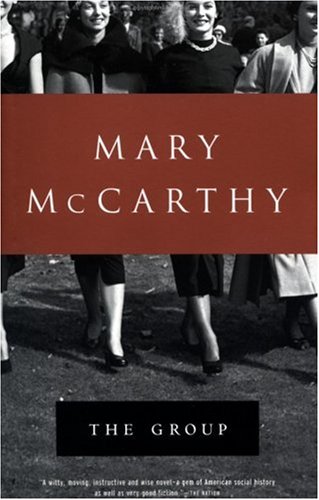
Book review: The Group

Posted by Bel. The time is 1:49pm here in Wellington, NZ.

As always, I was influenced by the cover and was not hopeful about this book. I had to request it from stack and it was a bit battered, with loopy hand-drawn daisies on the front - a bit 'flower power' and not reminiscent of the educated and privileged 1930s setting I was about to immerse myself in.

The Group opens with a wedding and ends with a funeral, covering a hectic decade in between, seen through a shifting prism of eight lives. The group of young American women have just finished college (Vassar, which doesn't mean much to me, but I've learnt is quite small and exclusive) and are on the cusp of adulthood in its various incarnations.

The book is startlingly modern and easy to read, with a humour that has lasted well. Anyone that has had a group of close female friends will relate to woven relationships, gossip and assignment of roles that goes with the territory. And although I say 'modern' some of the most interesting aspects of the book come from observing the dramatic changes in society that have happened so rapidly.

At the opening of the book, one character (Libby? Dottie? Helena? I forget. I'm a shocker with ensemble casts.) is directed by her lover to seek out contraception. This is a mortifying prospect and she discusses with a friend that they are fortunate it is even legal in their state. The only option is to be fitted with a diaphragm, a complicated and uncomfortable procedure in that day and age - especially thanks to the unfeeling male doctor.

Other issues, such as the occasional nonchalant anti-Semitism, underline how much times have changed.

Although this book is dominated by female narrative, the men in their lives play an important part. One woman marries the wrong man, despite their creative affinities, and has to battle through their disaster zone of a marriage. The parents of another decide to split and her dad moves into her New York apartment with her, becoming liberally politicised and annoying her with what we would call his glaringly obvious 'mid-life crisis'. Another casts aside men altogether, returning from years spent in Europe with a lesbian partner at her side.

Despite their education and privilege, the women in The Group don't come across as haughty or grating as you might expect. The Depression-era setting plays a big part, helping to make the ear and circumstances deeply resonant to today's "current economic climate".

After some googling, I've seen many comparisons made to Sex and The City, but those tarts don't have any of the depth and resilience of these women. The restrictions that kept them dominated and to being literally locked up in one case, were societal, not self-inflicted. Their aspirations are always for self-improvement - and not by way of consumerism.

Here are a couple of covers that popped up on the interwebs. This imagery I like, other than the candy coated colour corrected - but I suppose that goes hand-in-hand when Candace Bushnell has penned an introduction. They've even put her name into pink, in case anyone was still confused at this stage that this might not be a group of WOMEN we were all talking about.


This design I probably prefer - perhaps they could do a reissue with the photo from above with the cute leopard print coat and make my life complete?


--
The Group by Mary McCarthy. Highly recommended.
First published 1963. Set in New York, 1930s.
#39 from 'The List'